
The line problem (and how we solved it)
TL;DR
The line problem isn't the camera — it's that most booths do capturing, sharing, and printing on one device, so a single power user freezes everyone behind them.
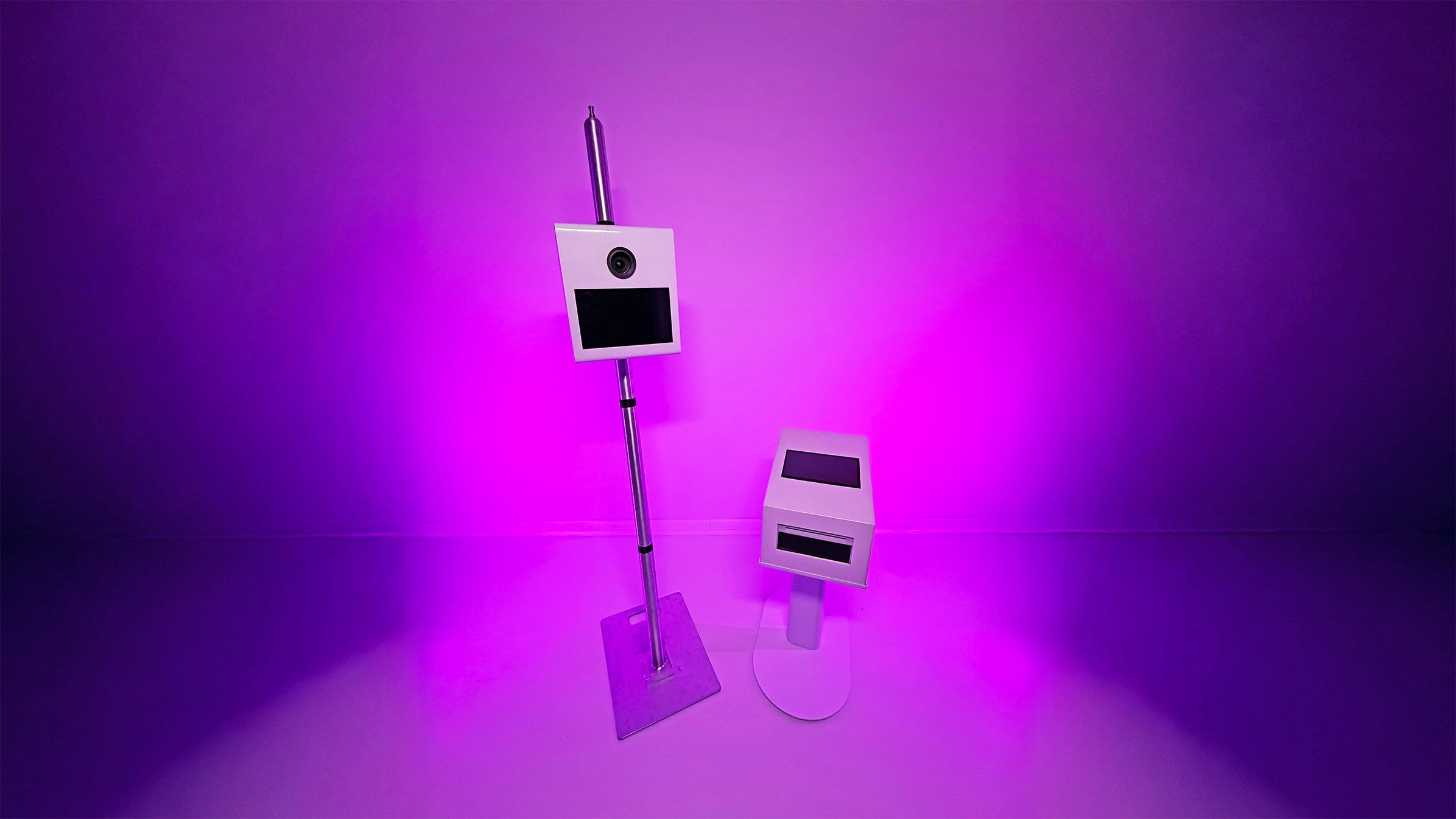
Our fix: split the work into two stations. The booth only takes pictures (one button, four shots). All the slow stuff — browsing, printing, sharing — happens at a separate print/share station you can place anywhere in the room.
One button, no menus. Walk up, press it, get four great shots about two seconds apart. The surprise is half the magic.
More options make lines worse, not better. Every filter, overlay, and AI gimmick adds friction at the capture point — which means fewer photos taken, not more.
Real numbers: a recent 80-guest event produced ~650 photos and ~200 prints with no line at the booth. We typically run 30–40 sessions an hour.
Place the booth near the dance floor — the energy transfers. Pair it with a great attendant who keeps things moving tactfully, and the after-dinner rush becomes flow instead of a wall of waiting people.
The philosophy: nail the pictures, the rest is gravy. Print to your heart's content, share instantly, or grab everything later from your online gallery. No rush, ever.
If you've ever stood near a photo booth at a wedding, you've watched it happen. The first group jumps in, has a blast, and then heads to the screen to print and post and reprint and text it to grandma. Behind them, the line builds. People shuffle. Someone checks their phone. And one by one, the folks who were excited two minutes ago quietly peel off to go find a drink. We've seen it at countless events — booths that weren't ours — and it always comes down to the same flaw.
Spend any time in communities like r/photobooth, r/weddingplanning, or r/Weddingsunder10k and you'll see the same anxiety on repeat: is a photo booth even worth it if there's always a line? Couples worry it'll eat their budget and then sit half-used because the queue scared people off. Vendors in r/Entrepreneur trade tips on "throughput" like it's a dark art. It isn't. The line problem is a design problem — and once you name it correctly, the solution is almost obvious.
The Diagnosis: It's not the camera. It's the one device doing everything.
Here's the thing almost nobody says out loud: in most booths, the picture-taking, the sharing, and the printing all happen on one device. So the second someone wants to be thorough — take a bunch of shots, pick favorites, print a few copies, text them around — the entire line is held hostage by that one person.
And you can't even blame them! They're doing exactly what they came to do. The booth just forces all of it to happen in a single chokepoint, in front of an audience. Guests get frustrated, and frustrated guests walk away to do something else. When we set out to build our booth, this exact scenario was the thing we designed against from day one.
The Solution: Split the work in two.
The fix is to separate the fast thing from the slow thing. Capturing photos is fast. Browsing, choosing, printing, and sharing is slow. So we put them in two different places.
At our booth, a guest steps up and there's one button to push to start. No choices to make. We take four pictures, about two seconds apart — and sometimes that surprise element is exactly what makes a great photo. We instantly show each shot back so they can see it, then take the next one. Usually it gets people laughing. The whole thing takes a minute or two.
Then they walk over to the print/share station — which can sit right next to the booth, twenty feet away, or across the room, whatever makes sense for the space. There they find their photo group in the gallery, tap it, and print to their heart's content. They can share instantly, even send the little animation we stitch together from the four shots. And if they get pulled back onto the dance floor before they make it over? No problem. Everything is waiting for them in an online gallery they can get to the next morning.
The booth's only job is to take great pictures. Everything that takes time, we moved out of the line.
That's the whole trick. The capture line never stalls, because the slow stuff isn't standing in it.
What We Resisted: The temptation was always "add more."
We'll be honest about what we got wrong early. During prototyping, we tried building options into the booth itself — more for guests to do, more to choose from. And every time, we kept coming back to the same conclusion: just take great pictures. Every option you put on the capture device is another decision a guest has to make while everyone behind them waits. So we've essentially built it this way from the very beginning. Restraint turned out to be the feature.
Case Study · A recent 80-guest reception
650 photos. 200 prints. No line at the booth.
We did an event recently with about 80 guests who loved taking pictures. We set the booth on the lawn right outside the dance floor, with the print station about fifteen feet away. By the end of the night we'd captured around 650 photos and made roughly 200 prints — and there was no line for the booth. At one point I noticed a small line at the print station, but it cleared out fast. People were running their own little photo shoots, taking four sets at a time, in just a minute or two each. That's the design working: the only line that formed was at the slow station, where a wait doesn't hurt anything.
The Hot Take: More options make the line worse.
Here's where we part ways with a lot of the industry. There are some very popular booths out there that sell endless customization — AI portraits, stacks of overlays, filters, every bell and whistle. That's genuinely cool if it's what you want for your guests. We just didn't go down that path, and here's why:
The more options — AI, overlays, whatever — the longer it takes someone to take their pictures. And that actually encourages people to take fewer.— the core of our design philosophy
We'd rather a guest take two or three sets — that's potentially twelve real, candid photos — and walk away with shots they love, than spend five minutes fiddling with a single over-produced image while ten people wait. "Premium" isn't more buttons. Premium is more moments actually captured.
For Couples & Planners: How to spot a booth that'll bottleneck.
If you're shopping for a booth, you don't need to be a tech expert to avoid the line problem. You just need to ask the right things. Here's what we'd tell a friend:
Ask any vendor these before you book
How easy is it for a guest to use? If a guest has to make a lot of choices at the booth, that's exactly where the time — and the line — will live.
Where do the choices happen? Options aren't bad. Options at the capture point are. Picking a favorite photo out of four is fine — as long as it happens at a separate station, away from the action.
What do the pictures actually look like? Strip away the gimmicks and look at the real output. Is all the extra stuff worth it, or is it just friction dressed up as features?
Is there an online gallery? Guests should never feel rushed. If everything's available online later, nobody has to hold up the line to "get theirs" in the moment.
The Numbers: What throughput actually looks like.
Planners love specifics, so here's how it tends to play out. We typically run 30 to 40 sessions an hour. Smaller events only need about two hours; larger ones run three or four, depending on what's happening with the dancing and other entertainment. A medium-sized event usually lands around 400–500 photos. Prints run from about 100 at smaller events to 200–300 at the bigger ones — all without the booth ever backing up.
30–40
sessions per hour
400–500
photos, medium event
100–300
prints per event
0
lines at the booth
Reading the Room: Place it by the dance floor. The energy transfers.
Where you put the booth matters as much as how it's built. When the booth lives near the dance floor, the energy transfers — if there's dancing, there's picture-taking. Weddings and anniversary parties bring that party atmosphere where people happily jump in on their own. Corporate events can run a little cooler, especially with a looser schedule and other entertainment competing for attention.
And yes, the after-dinner rush at weddings is real — and we love it. A single-device booth turns that surge into a wall of waiting people. Our two-station setup turns it into flow. A rush is only a problem if everyone has to funnel through one screen.
The Human Part: A great attendant prevents the line you can't design away.
Every booth we send out comes with an attendant, and they're not just there to babysit equipment. They get the shy and unsure guests into the booth, and they help everyone get a turn. Here's a real example: at one event, a group of young folks took over the booth for a solid ten minutes. We love it when kids get in — but a good attendant will tactfully ask if it's okay to let some other people go too. That keeps things moving in a way it simply wouldn't if no one were watching.
That's the piece the tech can't handle. Our design prevents the mechanical bottleneck. The attendant prevents the social one. You need both for there to be no line.
The Heart of It: Nail the pictures. The rest is gravy.
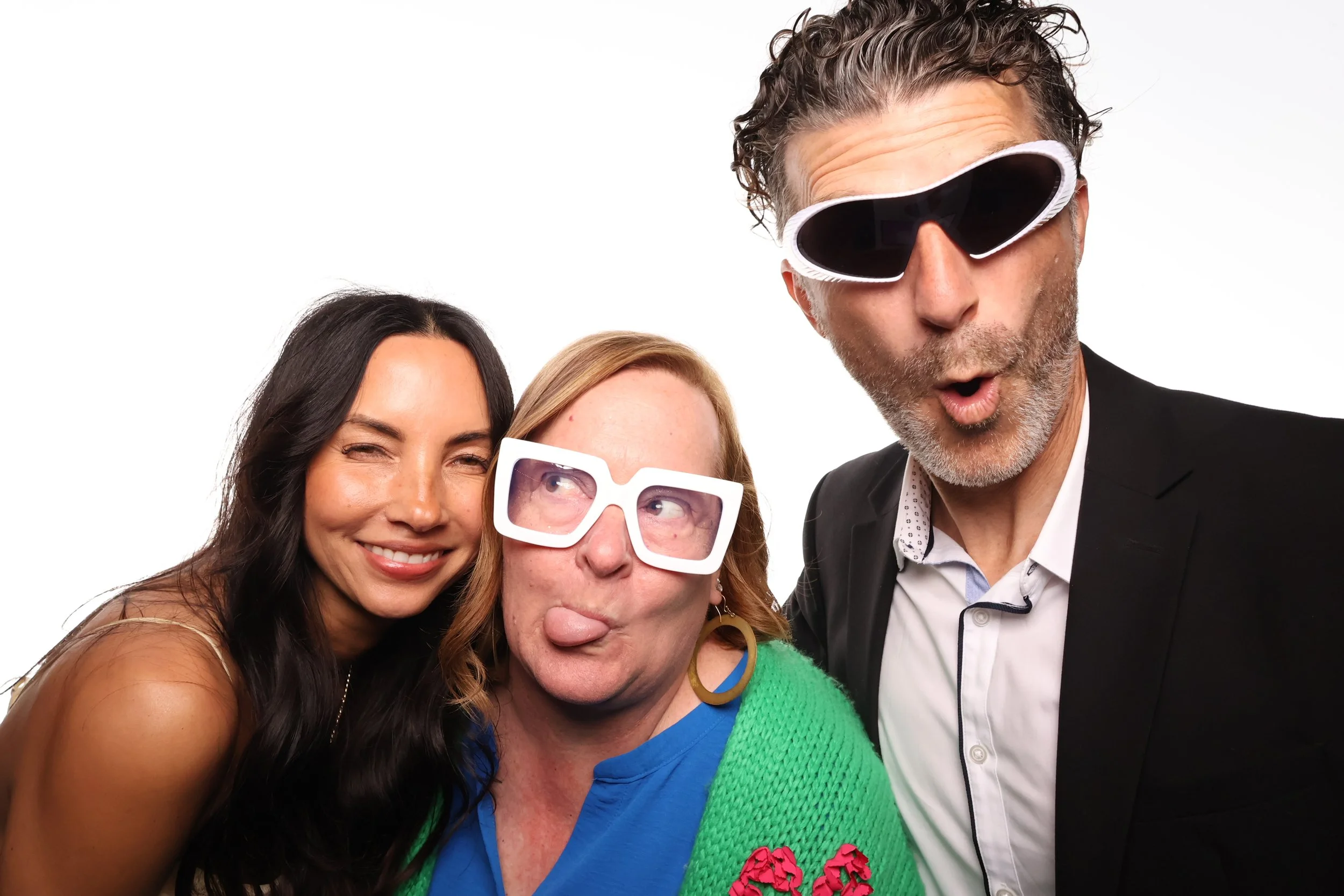
So here's what it all comes down to. Our booth is genuinely easy to use: walk up, press the button, bring your best poses. Just like that, you've got great photos — locked in. They'll be at the print/share station whenever you're ready. And if something pulls you away and you never make it over, every shot is waiting in an easy-to-access online gallery.
At the heart of what we do is taking great pictures. We nail that, and the rest is gravy. Print to your heart's content. Share immediately. Jump back in and try to outdo what you did last time. We want you to do it all and keep the fun going — not stand in a line.
That's the line problem, and that's how we solved it. Not with more features. With a better design.